Financial Literacy Education Programmes
Structured learning modules that teach young Ghanaians the practical financial knowledge they need before entering the workforce. Each programme combines clear explanation, mathematical demonstration, and interactive application.
Banking Fundamentals Programme
This programme demystifies the banking system for students who may never have held a bank account. We explain how banks operate, the different types of accounts available in Ghana, and what happens during deposits, withdrawals, and transfers.
Students learn to read bank statements, understand transaction codes, recognize different types of charges, and know when fees apply. We cover mobile money integration with traditional banking, the role of Ghana Interbank Payment and Settlement Systems, and how to protect account security.
- How banks hold and manage customer deposits
- Savings accounts versus current accounts — practical differences
- Understanding bank charges, fees, and when they apply
- Reading and interpreting bank statements accurately
- Mobile money and traditional banking integration
- Account security and protecting personal banking information

Payslips & Employment Deductions
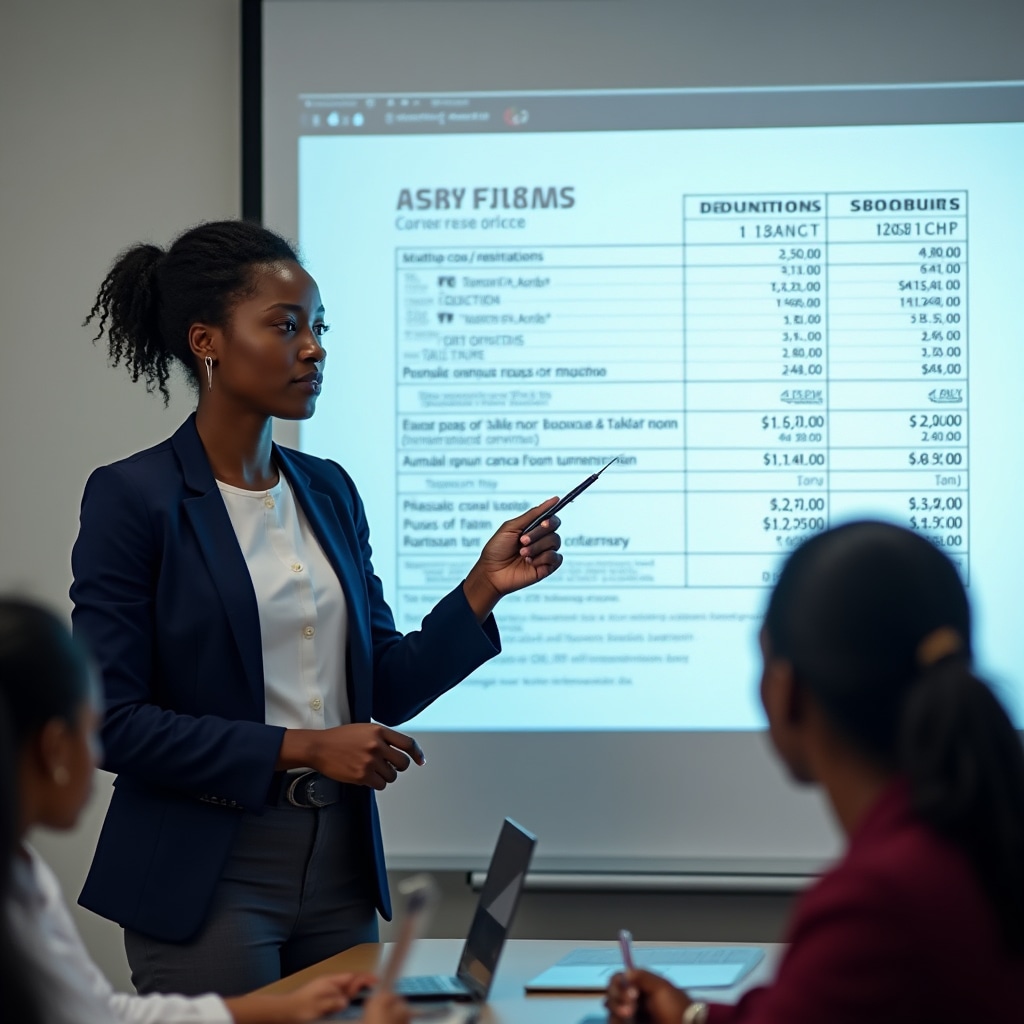
Most young Ghanaians receive their first formal payslip without understanding what each line means or why their take-home pay differs from the salary they negotiated. This programme breaks down every component of a Ghanaian payslip.
We explain gross salary versus net salary, demonstrate how SSNIT contributions are calculated, show how income tax brackets work, and clarify other common deductions. Students learn what to expect when they receive formal employment and can verify that their payslips reflect their employment agreements correctly.
- Gross salary and net salary — understanding the difference
- SSNIT contribution calculations and what they fund
- Income tax brackets and progressive taxation in Ghana
- Common payroll deductions and what they represent
- Verifying payslip accuracy against employment contracts
- Understanding allowances, bonuses, and overtime calculations
Interest Rate Mathematics
Interest rates govern borrowing costs and savings growth, yet many young people make financial decisions without understanding the underlying calculations. This programme teaches the actual mathematics behind interest rates.
Students learn the difference between simple and compound interest, practice calculating interest on different principal amounts and time periods, and understand how interest rates translate to real costs or earnings. We demonstrate how small rate differences create large outcome differences over time.
- Simple interest calculation and when it applies
- Compound interest and the power of time
- Annual percentage rate versus stated interest rate
- Calculating total loan cost including interest
- Understanding how interest affects savings growth
- Comparing interest rates across different financial products

Hire-Purchase & Credit Understanding
Hire-purchase agreements allow people to acquire goods immediately while paying over time, but the true cost often surprises buyers. This programme teaches students to evaluate hire-purchase arrangements critically.
We demonstrate how to calculate the total amount paid under hire-purchase compared to cash price, identify hidden charges and fees, understand repossession risks, and determine whether a specific hire-purchase arrangement makes financial sense for their situation.
- How hire-purchase agreements work in Ghana
- Calculating total cost versus cash purchase price
- Understanding deposit requirements and payment schedules
- Identifying hidden charges and administrative fees
- Ownership rights during hire-purchase period
- Evaluating whether hire-purchase makes financial sense
SSNIT Contributions & Retirement Planning
Young workers often view SSNIT deductions as money lost from their paycheck rather than understanding these contributions as retirement savings. This programme explains how the Social Security and National Insurance Trust system works.
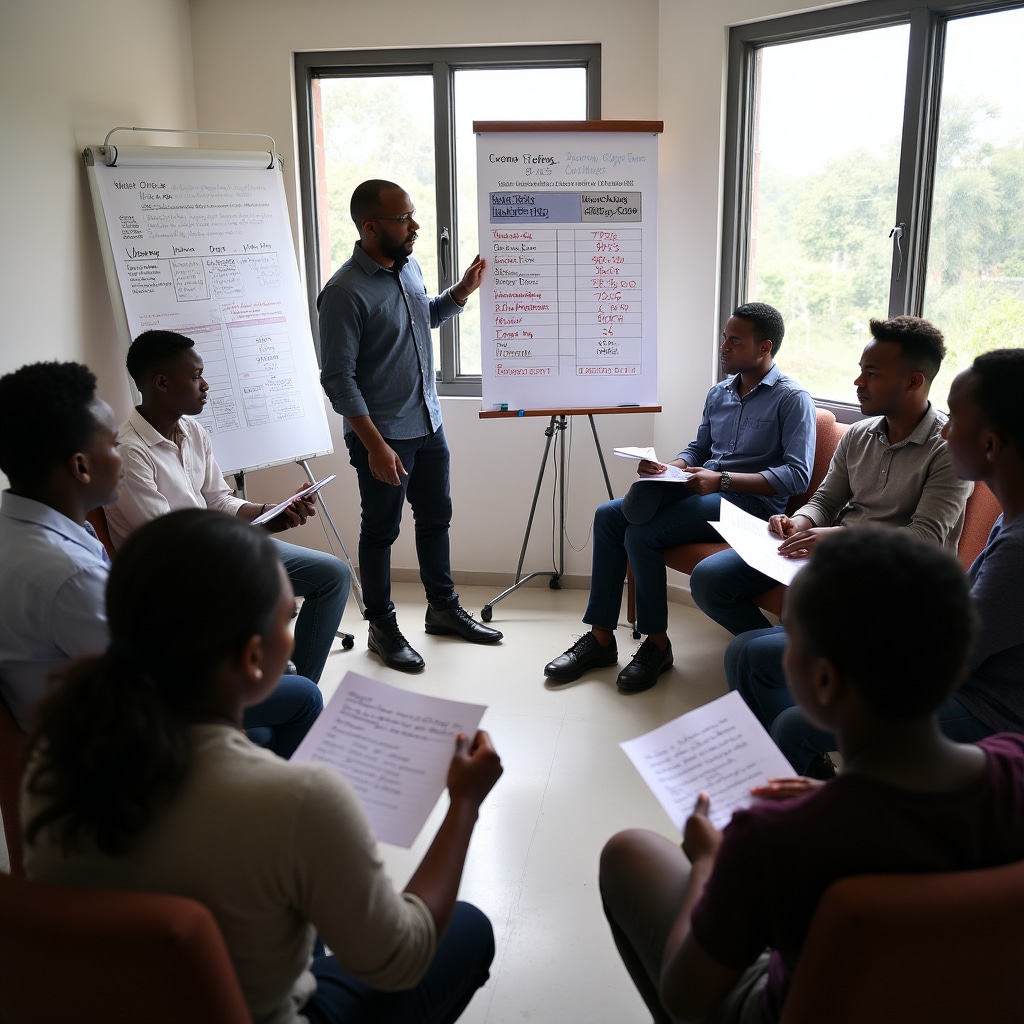
Students learn what their monthly contributions accumulate to over a working career, how retirement benefits are calculated, what happens to contributions if they change jobs, and why these deductions matter for long-term financial security even when retirement seems distant.
- How SSNIT contributions are calculated from salary
- What SSNIT funds provide — pensions, invalidity, survivors benefits
- Accumulation over a working career — real number examples
- Retirement benefit calculations and eligibility
- Portability of contributions between employers
- Why early contributions matter more than late ones

Practical Budgeting With Irregular Income
Many young Ghanaians work in contexts where income varies month to month — commission-based sales, freelance work, seasonal employment, or small business operations. Traditional budgeting advice assumes regular paychecks, which does not reflect their reality.
This programme teaches budgeting strategies that work with irregular income. Students learn to identify fixed versus variable expenses, create spending priorities, build emergency reserves during good months, and make decisions when income falls short of expenses.
- Distinguishing between fixed and variable expenses
- Creating spending priorities when income varies
- Building emergency reserves during higher-income periods
- Managing expenses when income drops unexpectedly
- Calculating average income over time for planning
- Avoiding debt cycles when facing income gaps

How Schools Book Lendavestro Sessions
We work with senior secondary schools, TVET institutions, and training centres throughout Greater Accra to deliver financial literacy education that fits their scheduling needs and educational objectives.
Initial Contact
School administrators contact us to discuss their students' financial literacy needs and preferred programme format.
Programme Design
We recommend appropriate modules based on student age, educational level, and available time. Single sessions or multi-week programmes.
Session Delivery
Our educators deliver interactive sessions at your institution, combining explanation, demonstration, and practical application throughout.